I Had Pneumonia Can I Get It Again
Pneumonia - weakened immune system
Pneumonia in immunodeficient patient; Pneumonia - immunocompromised host; Cancer - pneumonia; Chemotherapy - pneumonia; HIV - pneumonia
Pneumonia is a lung infection. It can be caused by many unlike germs, including bacteria, viruses, and fungi.
This article discusses pneumonia that occurs in a person who has a difficult fourth dimension fighting off infection because of problems with the immune system. This type of disease is called "pneumonia in an immunocompromised host."
Related conditions include:
- Infirmary-caused pneumonia
- Pneumocystis jiroveci (previously called Pneumocystis carinii) pneumonia
- Pneumonia - cytomegalovirus
- Pneumonia
- Viral pneumonia
- Walking pneumonia
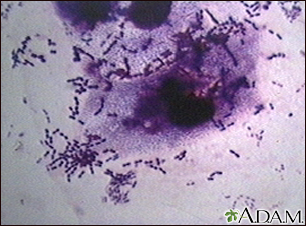
This motion-picture show shows the organism Pneumococci. These bacteria are usually paired (diplococci) or appear in chains. Pneumococci are typically associated with pneumonia, merely may cause infection in other organs such equally the brain (pneumococcal meningitis) and blood stream (pneumococcal septicemia). (Image courtesy of the Centers for Illness Command and Prevention)
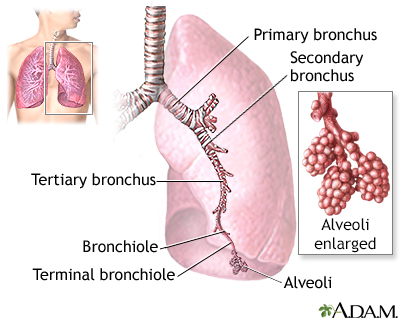
The major features of the lungs include the bronchi, the bronchioles and the alveoli. The alveoli are the microscopic blood vessel-lined sacks in which oxygen and carbon dioxide gas are exchanged.
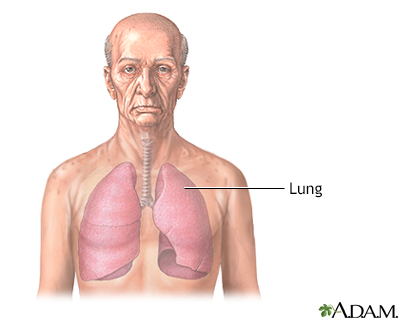
The lungs, located in the thoracic crenel, are the main organs of respiration.
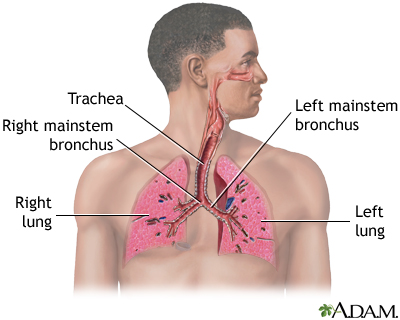
Air is breathed in through the nasal passageways, travels through the trachea and bronchi to the lungs.
Causes
People whose immune organization is not working well are less able to fight off germs. This makes them decumbent to infections from germs that do not ofttimes cause illness in healthy people. They are likewise more than vulnerable to regular causes of pneumonia, which can affect anyone.
Your immune system may be weakened or not work well considering of:
- Bone marrow transplant
- Chemotherapy
- HIV infection
- Leukemia, lymphoma, and other conditions that harm your bone marrow
- Autoimmune disorders
- Medicines (including steroids, and those used to treat cancer and control autoimmune diseases)
- Organ transplant (including kidney, center, and lung)
Everyone coughs from time to fourth dimension. You might option up a cold, take an allergy, or just get a tickle from something irritating your pharynx. But if you're actually hacking and coughing up yellow or light-green mucus, and you lot've also got a fever, chills, and shortness of breath, you may accept picked upward a more serious infection, called pneumonia. And sometimes pneumonia's symptoms aren't as obvious. Pneumonia is caused by an infection in your lung. Bacteria or viruses like these can sometimes go into your lungs through your nose or mouth and brand yous sick. You're more probable to become pneumonia if you've got a problem with your immune system that makes it harder to fight off infections. You lot're also at greater risk if you've got a lung disease like COPD or cystic fibrosis, you've recently had the flu, or you're exposed to cigarette smoke. People who live in nursing homes are besides more likely to get pneumonia. With pneumonia, you may coughing up greenish or yellow phlegm. You as well may run a fever and accept the chills. Pneumonia tin can make information technology hard to exhale. You may feel similar you've run up a flight of stairs when you were but sitting still. Your md can tell that yous accept pneumonia and not just a cold by listening with a stethoscope for crepitation sounds in your chest. Yous may need a chest 10-ray or claret tests to know for certain that yous accept pneumonia. If bacteria caused your pneumonia, your physician tin give you antibiotics, drugs that kill bacteria. Keep taking the antibiotic until y'all terminate the whole prescription so you don't re-infect yourself. To assistance loosen all of that mucus bottleneck your lungs, exhale in the warm mist from a humidifier and potable plenty of water. Take it easy too. Don't try to run back to work and infect anybody else. Balance until you feel ameliorate. Whatsoever you exercise, don't smoke, information technology will only make your pneumonia worse. If your pneumonia is really astringent or y'all have another serious wellness trouble, your doctor may recommend that you get treated in the hospital. While in that location, you'll get antibiotics and fluids through a vein. You lot may also be given oxygen to assist you breathe easier. The best way to bargain with pneumonia is to avert getting information technology in the first place. Older adults, children, and people with serious conditions like diabetes, asthma, cancer, and emphysema should talk to their doc about getting vaccinated confronting pneumonia and the illnesses that cause it. One time you get treated, your pneumonia should articulate up inside a couple of weeks. Your doctor may desire to bank check your lungs to brand sure they're clear. Sometimes pneumonia tin can lead to serious lung complications, then call your doctor right away if your breathing issues get worse, you have chest hurting, or you coughing up blood.
Symptoms
Symptoms may include:
- Cough (may be dry or produce mucus-like, greenish, or pus-similar sputum)
- Chills with shaking
- Fatigue
- Fever
- Full general discomfort, uneasiness, or sick feeling (malaise)
- Headache
- Loss of ambition
- Nausea and vomiting
- Abrupt or stabbing chest pain that gets worse with deep breathing or coughing
- Shortness of breath
Other symptoms that may occur:
- Heavy sweating or nighttime sweats
- Stiff joints (rare)
- Stiff muscles (rare)
Exams and Tests
Your health care provider may hear crackles or other abnormal breath sounds when listening to your chest with a stethoscope. Decreased volume of breath sounds is a central sign. This finding may mean there is a buildup of fluid between the breast wall and lung (pleural effusion).
Tests may include:
- Arterial claret gases
- Blood chemistries
- Claret civilization
- Bronchoscopy (in sure cases)
- Chest CT browse (in certain cases)
- Breast x-ray
- Complete claret count
- Lung biopsy (in certain cases)
- Serum cryptococcus antigen test
- Serum galactomannan test
- Galactomannan examination from bronchial alveolar fluid
- Sputum civilization
- Sputum Gram stain
- Sputum immunofluorescence tests (or other immune tests)
- Urine tests (to diagnose Legionnaire disease or Histoplasmosis)
Treatment
Antibiotics or antifungal medicines may be used, depending on the type of germ that is causing the infection. Antibiotics are not helpful for viral infections. You may need to stay in the hospital during the early on stages of the illness.
Oxygen and treatments to remove fluid and fungus from the respiratory system are oft needed.
Outlook (Prognosis)
Factors that may pb to a worse outcome include:
- The pneumonia that is caused by a mucus.
- The person has a very weak immune organization.
Possible Complications
Complications may include:
- Respiratory failure (a condition in which a patient can't take in oxygen and get rid of carbon dioxide without the use of a machine to deliver breaths.)
- Sepsis
- Spread of the infection
- Death
When to Contact a Medical Professional person
Call your provider if you have a weakened immune system and you have symptoms of pneumonia.
Prevention
If you have a weakened immune system, you may receive daily antibiotics to prevent some types of pneumonia.
Ask your provider if you should receive the flu (flu) and pneumococcal (pneumonia) vaccines.
Do good hygiene. Thoroughly wash your easily with soap and water:
- After being outdoors
- After changing a diaper
- After doing housework
- After going to the bathroom
- Subsequently touching body fluids, such as mucus or blood
- After using the telephone
- Before handling food or eating
Other things you can do to reduce your exposure to germs include:
- Keep your house make clean.
- Stay away from crowds.
- Ask visitors who accept a cold to wear a mask or not to visit.
- DO Non practice m piece of work or handle plants or flowers (they can carry germs).
References
Burns MJ. The immunocompromised patient. In: Walls RM, Hockberger RS, Gausche-Hill M, eds. Rosen's Emergency Medicine: Concepts and Clinical Exercise. 9th ed. Philadelphia, PA: Elsevier; 2018:chap 187.
Donnelly JP, Blijlevens NMA, van der Velden WJFM. Infections in the immunocompromised host: general principles. In: Bennett JE, Dolin R, Blaser MJ, eds. Mandell, Douglas, and Bennett'south Principles and Exercise of Infectious Diseases, Updated Edition. 8th ed. Philadelphia, PA: Elsevier Saunders; 2015:chap 309.
Marr KA. Approach to fever and suspected infection in the compromised host. In: Goldman L, Schafer AI, eds. Goldman-Cecil Medicine. 25th ed. Philadelphia, PA: Elsevier Saunders; 2016:chap 281.
Wunderink RG, Restrepo MI. Pneumonia: considerations for the critically sick. In: Parrillo JE, Dellinger RP, eds. Disquisitional Care Medicine: Principles of Diagnosis and Management in the Adult. fifth ed. Philadelphia, PA: Elsevier; 2019:chap 40.
Version Info
Final reviewed on: 5/10/2019
Reviewed by: Jatin Thousand. Vyas, Dr., PhD, Assistant Professor in Medicine, Harvard Medical School; Assistant in Medicine, Sectionalization of Infectious disease, Department of Medicine, Massachusetts General Hospital, Boston, MA. Also reviewed by David Zieve, Md, MHA, Medical Director, Brenda Conaway, Editorial Director, and the A.D.A.M. Editorial team.

Source: https://www.mountsinai.org/health-library/diseases-conditions/pneumonia-weakened-immune-system
0 Response to "I Had Pneumonia Can I Get It Again"
Post a Comment